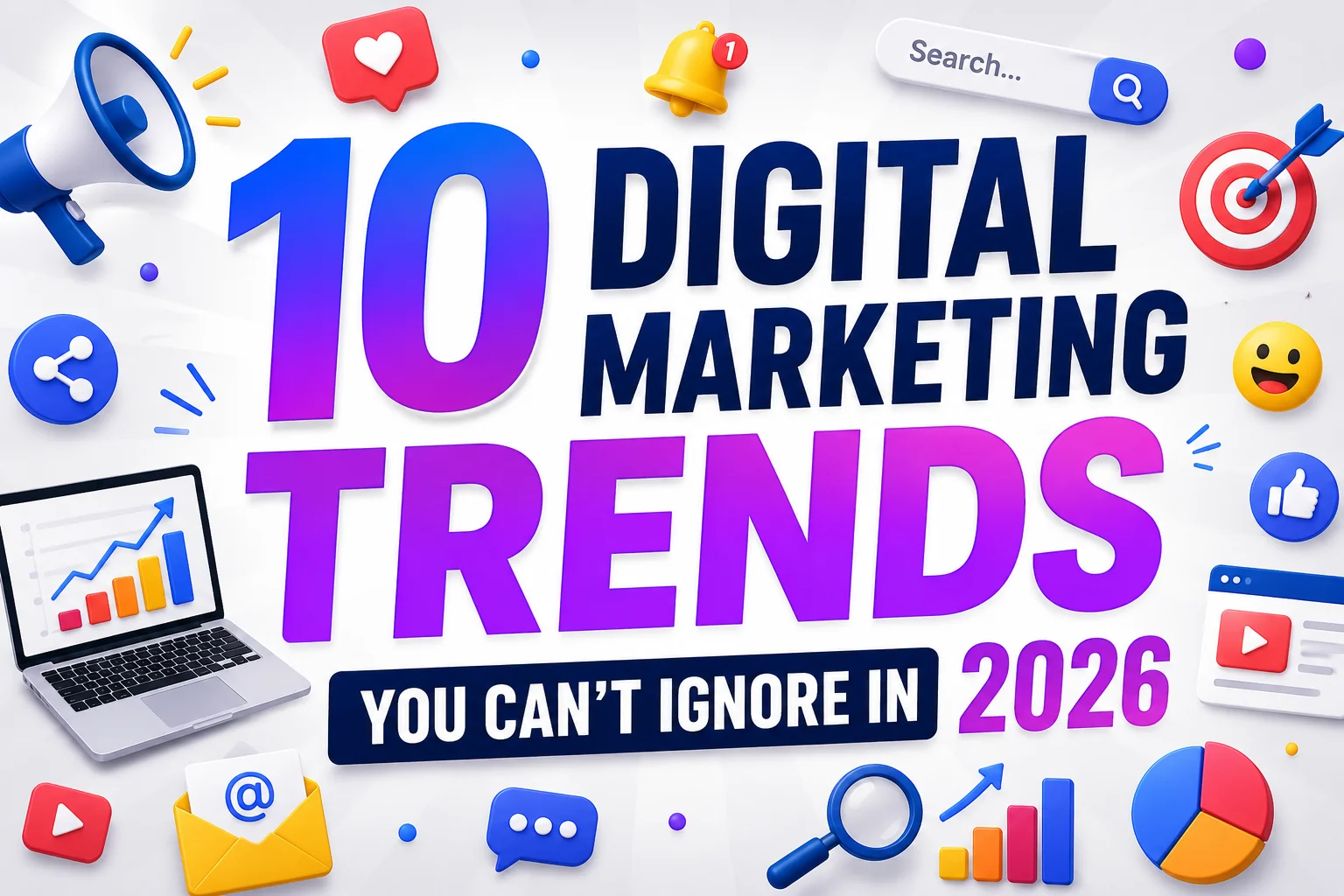
Digital marketing is evolving faster than ever. What worked in 2024 or even 2025 may no longer deliver the same results in 2026. Artificial Intelligence, voice search, AI-powered search engines, short-form videos, and hyper-personalized marketing are changing how businesses attract customers.
If you want to stay ahead of your competitors, these digital marketing trends in 2026 should be part of your strategy.
Let’s explore the biggest changes shaping the future of digital marketing.
Quick Answer
The biggest digital marketing trends in 2026 include AI-powered SEO, AI search optimization, voice search, short-form videos, personalized marketing, zero-click search, social commerce, first-party data, influencer marketing, and automation. Businesses adopting these trends will generate more traffic, leads, and sales.
1. AI-Powered SEO Will Dominate Search
Artificial Intelligence is no longer optional.
Google’s AI Overviews, ChatGPT Search, Gemini, and Bing AI are changing how users find information.
Instead of simply ranking on Google, businesses now need content that AI can understand and recommend.
Best Practices
- Write human-first content
- Answer user questions clearly
- Use structured headings
- Add FAQs
- Include schema markup
- Demonstrate Experience, Expertise, Authoritativeness, and Trustworthiness (E-E-A-T)
2. AI Search Optimization (AEO + GEO)
Traditional SEO is evolving into AI Search Optimization.
Businesses now need content optimised for:
- Google AI Overviews
- ChatGPT Search
- Gemini AI
- Bing AI
- Perplexity AI
- Voice assistants
Content should provide direct answers instead of keyword stuffing.
3. Voice Search Continues to Grow
Millions of users now search using voice.
Instead of typing:
“best digital marketing agency”
People ask:
“Which is the best digital marketing agency near me?”
Optimise your content with conversational language.
Include:
- FAQs
- Local keywords
- Natural sentences
- Long-tail keywords
4. Short-Form Video Marketing is King
Instagram Reels.
YouTube Shorts.
Facebook Reels.
TikTok (where available).
LinkedIn Videos.
Short videos generate higher engagement than static images.
Businesses should create:
- Educational videos
- Product demos
- Behind-the-scenes clips
- Customer testimonials
- Quick tips
Consistency matters more than perfection.
5. Hyper-Personalization Using AI
Customers expect personalised experiences.
AI tools can recommend:
- Products
- Emails
- Offers
- Landing pages
- Content
Personalisation increases engagement and conversion rates.
Examples include:
- Product recommendations
- Dynamic website content
- Personalised email campaigns
- AI chat support
6. Zero-Click Searches Are Increasing
Many users get answers without clicking a website.
Google AI Overviews now answer questions directly.
To increase visibility:
- Write concise answers
- Use bullet points
- Add FAQ sections
- Optimise featured snippets
- Implement schema markup
Being featured can build authority even without a traditional click.
7. Social Commerce Will Continue Growing
People are buying directly from social media.
Popular platforms include:
- Instagram Shop
- Facebook Shop
- YouTube Shopping
- Pinterest Shopping
Businesses should integrate shopping with their social media strategy.
Easy checkout leads to more sales.
8. First-Party Data Becomes Essential
Third-party cookies are disappearing.
Businesses need their own customer data.
Collect data through:
- Email subscriptions
- Loyalty programmes
- Website registrations
- Customer accounts
- Lead magnets
First-party data enables better targeting while respecting user privacy.
9. Influencer Marketing Will Become More Authentic
Consumers trust real people.
Micro-influencers often outperform celebrities because their audiences are highly engaged.
Businesses should partner with creators who:
- Match their niche
- Have genuine engagement
- Create authentic content
- Build long-term relationships
Trust drives conversions.
10. Marketing Automation Saves Time
Automation improves efficiency.
Businesses automate:
- Emails
- Social media scheduling
- Lead nurturing
- Customer follow-ups
- CRM workflows
Automation allows marketing teams to focus on strategy instead of repetitive tasks.
Why These Digital Marketing Trends Matter
Ignoring these changes means falling behind competitors.
Businesses adopting modern digital marketing strategies can:
- Increase organic traffic
- Generate more qualified leads
- Improve conversion rates
- Build customer trust
- Reduce marketing costs
- Grow faster in competitive markets
The future belongs to businesses that adapt quickly.
How to Prepare Your Business for 2026
Start with these steps:
- Update your SEO strategy
- Create AI-friendly content
- Invest in video marketing
- Optimise for voice search
- Collect first-party data
- Use marketing automation
- Improve website speed
- Focus on user experience
- Build brand authority
- Track analytics regularly
Small improvements today can produce significant long-term results.
Frequently Asked Questions
What is the biggest digital marketing trend in 2026?
AI-powered SEO and AI search optimisation are expected to be the biggest trends because users increasingly rely on AI-powered search engines for answers.
Is traditional SEO still important?
Yes. Traditional SEO remains essential, but it should now be combined with AI optimisation, high-quality content, and user-focused strategies.
Why is video marketing important?
Short-form videos attract more engagement, improve brand awareness, and help businesses reach audiences across multiple social platforms.
What is AI Search Optimization?
AI Search Optimization focuses on creating content that AI-powered search engines like Google AI Overviews, ChatGPT Search, and Gemini can easily understand and recommend.
How can small businesses benefit from these trends?
Small businesses can improve visibility, generate more leads, build customer trust, and compete with larger brands by adopting AI, video marketing, local SEO, and personalised marketing.
Final Thoughts
Digital marketing in 2026 is no longer just about ranking on Google. Success requires creating valuable, AI-friendly, user-focused content while embracing automation, video, personalisation, and data-driven marketing.
Businesses that adapt early will have a significant competitive advantage.
If you’re planning your marketing strategy for 2026, now is the time to implement these trends and stay ahead of the competition.


